
Description
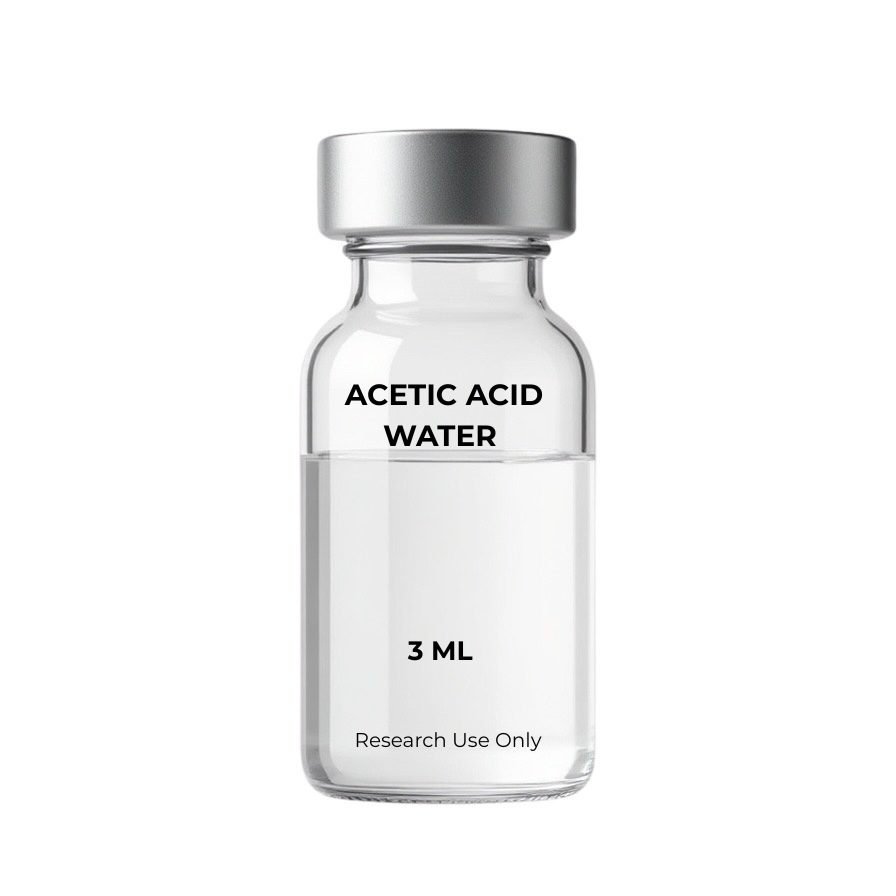
High-Purity Acetic Acid Water 3ml (0.6%): Essential Reconstitution Solution for Laboratory Research
Introduction to Acetic Acid Water 3ml (0.6%)
When conducting advanced biochemical studies, molecular biology workflows, or specialized peptide analysis, achieving proper compound solubility is critical. Acetic Acid Water 3ml (0.6%) is a precision-formulated, research-grade solvent designed specifically to aid in the reconstitution of difficult, long-chain, or hydrophobic peptides.
Unlike standard bacteriostatic water, the mild acidic environment provided by a 0.6% acetic acid solution helps prevent clumping, cloudiness, and structural aggregation in complex compounds, ensuring consistent, reliable, and reproducible experimental results.
Key Features & Technical Specifications
-
Product Type: Research-grade reconstitution solvent / Laboratory reagent
-
Concentration: 0.6% Acetic Acid in sterile, highly purified water
-
Volume: Convenient 3ml multi-use or single-experiment glass/polymer research vial size
-
Quality Standard: High purity, filtered, and tested under strict laboratory conditions to maintain clarity and compositional consistency
-
Primary Function: Optimizes pH balance and enhances the solubility of specific peptides known to exhibit aggregation challenges (such as certain growth hormone fragments or specialized synthetic chains).
Why Choose 3ml Vials for Your Laboratory?
-
Minimized Contamination Risks: Smaller 3ml packaging formats reduce the frequency of multi-puncture exposure over prolonged periods, supporting optimal aseptic laboratory techniques.
-
Precision and Portability: Ideal for benchtop protocols requiring exact volumes of solvent without opening large-format (e.g., 10ml or 30ml) supply bottles repeatedly.
-
Optimized Shelf Stability: Sealed securely under sterile conditions to preserve chemical integrity until ready for immediate protocol execution.
Applications in Scientific Research
Acetic acid water is widely utilized across academic, pharmaceutical, and independent research settings for:
-
Peptide Reconstitution: Assisting compounds that demonstrate poor aqueous solubility or a tendency to form visible gels or strands in neutral water.
-
Preliminary Dissolution: Frequently used as an initial solvent step prior to subsequent dilution with bacteriostatic water or buffers to meet final experimental concentrations.
-
Analytical Chemistry & Biochemistry: Serving as a mild acidifying agent for stabilizing proteins and peptide structures during targeted in-vitro trials.
Proper Storage and Handling Guidelines
To maintain the absolute integrity and purity of your research materials, adhere to the following handling procedures:
-
Storage Temperature: Store sealed containers at controlled room temperature (2°C to 25°C), away from direct sunlight and heat sources.
-
Aseptic Technique: Always utilize proper laboratory PPE and sterile syringes/needles when extracting from the 3ml vial to prevent accidental biological or chemical contamination.
-
Compliance Notice: This product is strictly intended for laboratory, analytical, and scientific research use only. It is not authorized for human consumption, clinical use, veterinary applications, or diagnostic procedures.
Frequently Asked Questions (FAQ)
1. Why is 0.6% concentration preferred for research?
A 0.6% concentration provides a mild, balanced acidic environment. It is strong enough to assist with the solubilization of complex, hydrophobic peptide chains without introducing excessive acidity that could degrade sensitive compounds.
2. Can I use acetic acid water instead of bacteriostatic water?
It depends on the specific protocol requirements. While bacteriostatic water (containing 0.9% benzyl alcohol) is used for standard dissolutions, acetic acid water is specifically selected when a compound demonstrates poor solubility or cloudiness in neutral water. Researchers often use it as a primary solvent before further dilution.
3. How should I dispose of leftover solution?
Always follow your institution’s hazardous waste management policies and local environmental regulations for chemical disposal.

Reviews
There are no reviews yet.